

S U N >< S E T
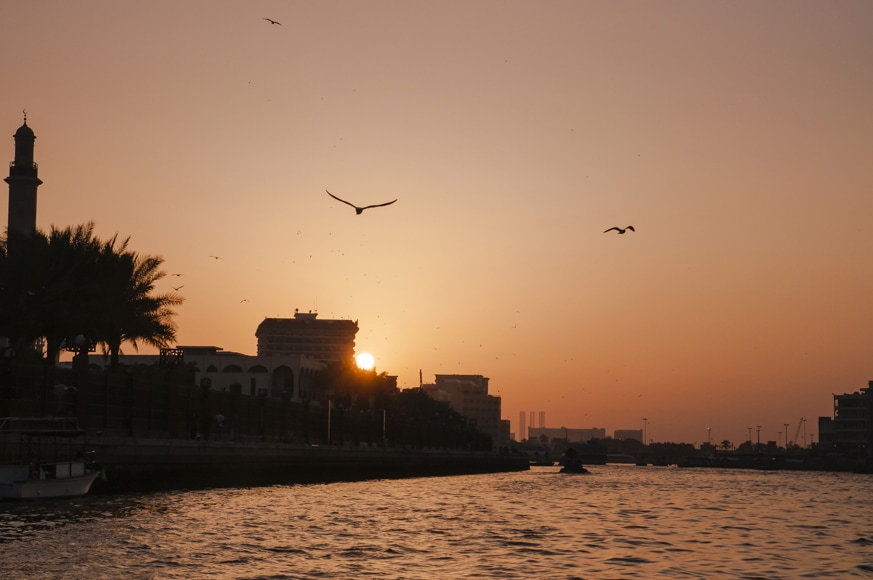
Also known as sundown, the sunset is the daily disappearance of the Sun below the horizon due to Earth’s rotation.
R O O T S 
In some languages, points of the compass bear names etymologically derived from words for sunrise and sunset. In Russian, the word for west, запад (zapad), is derived from the words за – meaning»behind», and пад – signifying «fall» (from the verb падать – padat’), due to the act of the Sun falling behind the horizon.
E T I M O L O G Y
From Middle English son-sett, Sonne set, equivalent to sun + set. In Gower’s Confessio Amantis, before 1393
C O L O R S
As a ray of white sunlight travels through the atmosphere to an observer, some of the colors are scattered out of the beam by air molecules and airborne particles, changing the final color of the beam the viewer sees.

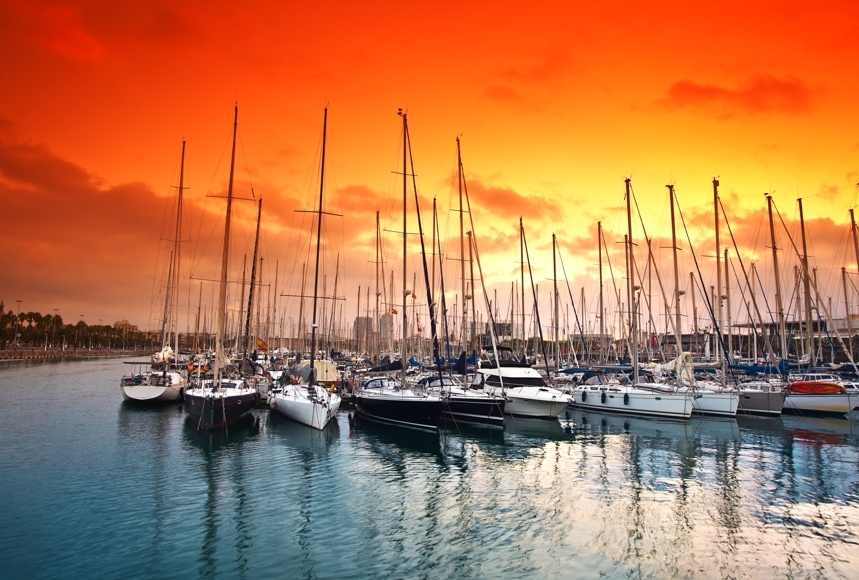
At sunrise and sunset, when the path through the atmosphere is longer, the blue and green components are removed almost completely, leaving the longer wavelength orange and red hues we see at those times. The remaining reddened sunlight can then be scattered by cloud droplets and other relatively large particles to light up the horizon red and orange.Ash from volcanic eruptions, trapped within the troposphere, tends to mute sunset and sunrise colors, while volcanic ejecta that is instead lofted into the stratosphere (as thin clouds of tiny sulfuric acid droplets), can yield beautiful post-sunset colors called afterglows and pre-sunrise glows.
H I S T O R Y 
The 16th-century astronomer Nicolaus Copernicus was the first to present to the world a detailed and eventually widely accepted mathematical model supporting the premise that the Earth is moving and the Sun actually stays still, despite the impression from our point of view of a moving Sun.
P L A N E T S
Sunsets on other planets appear different because of differences in the distance of the planet from the Sun and non-existent or differing atmospheric compositions.
 M A R S
On Mars, the setting Sun appears about two-thirds the size it appears on Earth because of its greater distance from the Sun, but some Martian sunsets last significantly longer and appear far redder than is typical on Earth.
The colors of the Martian sunset differ from those on Earth. Mars has a thin atmosphere, lacking oxygen and nitrogen, so the light scattering is not dominated by a Rayleigh Scattering process. Instead, the air is full of red dust, lown into the atmosphere by high winds, so its sky color is mainly determined by a Mie Scattering process. One study also reported that Martian dust high in the atmosphere can reflect sunlight up to two hours after the sun has set, casting a diffuse glow across the surface of Mars.
Q U O T E S
“Clouds come floating into my life, no longer to carry rain or usher storm, but to add color to my sunset sky.”
― Stray Birds
“When the sun has set, no candle can replace it.”
―
“Twilight fell: The sky turned to a light, dusky purple littered with tiny silver stars.”
―
“The first stab of love is like a sunset, a blaze of color — oranges, pearly pinks, vibrant purples…”
―
“A sunset is the sun’s fiery kiss to the night.”
―
P O S T S


T O P 5
The Taj Mahal, India

The Atacama Desert, Chile

The Matterhorn, Switzerland

Punta del Este, Uruguay

Salar of Uyuni, Bolivia

G A L L E R Y




S U N S E T
 S U N - S E T